Choosing the right packaging style can be confusing when two options both look useful. Corrugated boxes and rigid boxes are two of the most popular choices for custom packaging, but they serve different purposes. One is built for strength, shipping, and practical protection. The other is built for premium presentation, gifting, and a high-end customer experience.
The best choice depends on your product, budget, shipping method, brand position, and how you want customers to feel when they receive or open the package.
This guide breaks down the difference in simple terms so you can make a better packaging decision.
What Are Corrugated Boxes?
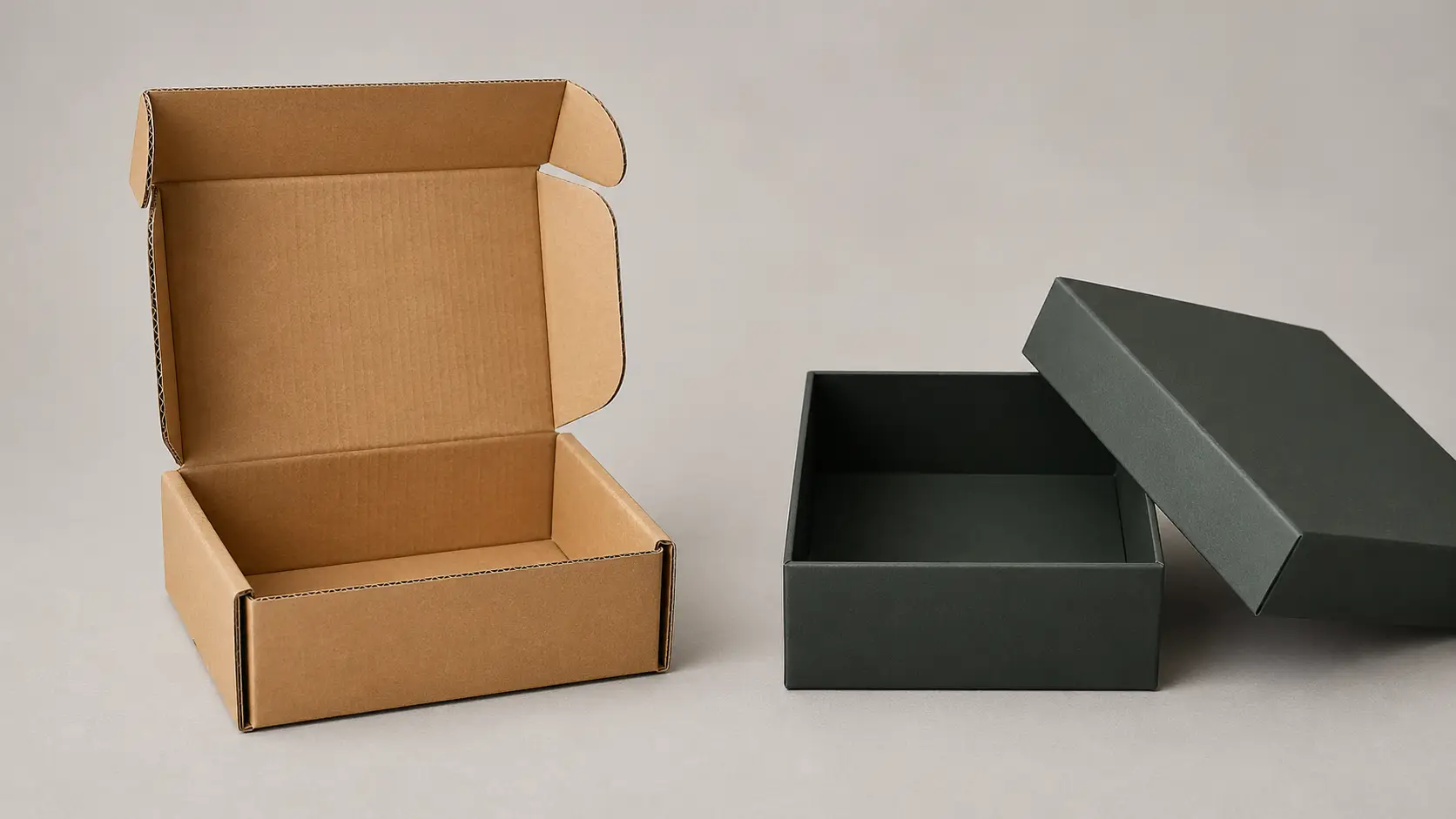
Corrugated boxes are made with fluted paper between liner boards. That fluted layer gives the box strength while keeping it relatively lightweight. This is why corrugated packaging is commonly used for shipping, ecommerce, subscription boxes, food delivery, and products that need protection during transit.
Corrugated boxes can be simple or highly branded. A plain shipping box may be enough for some businesses, while others use custom printing, inside print, inserts, and branded tape to create a more polished experience.
Common corrugated box styles include mailer boxes, shipping boxes, gable boxes, interlock boxes, and pizza boxes.
When Corrugated Boxes Are the Better Choice
Corrugated boxes are usually the better option when protection and shipping strength are priorities. If your product will travel through delivery networks, warehouses, or retail distribution, corrugated packaging can help reduce damage.
They are also useful when you need packaging that is cost-effective at scale. Corrugated boxes can be produced in custom sizes, which helps reduce empty space and lower the need for extra filler.
Choose corrugated boxes if your product is shipped directly to customers, needs strong protection during transit, needs a lightweight packaging option, or requires custom sizing for ecommerce orders. Corrugated packaging can still look attractive. A custom mailer box with clean branding can feel professional and memorable without becoming overly expensive.
What Are Rigid Boxes?
Rigid boxes are made from thick paperboard and are known for their sturdy, premium feel. They do not collapse the same way folding cartons do, which gives them a strong structure and a luxury presentation.
Rigid boxes are often used for products where first impression matters a lot. Think gift sets, cosmetics, jewelry, electronics, candles, apparel accessories, and premium retail goods.
These boxes can include magnetic closures, lift-off lids, sleeves, trays, inserts, textured papers, foil stamping, embossing, and other finishing details.
When Rigid Boxes Are the Better Choice
Rigid boxes are usually the better choice when presentation is the priority. They make products feel more valuable and gift-ready. Customers often keep rigid boxes because they feel durable and attractive.
Choose rigid boxes if your product is premium or gift-focused, you want a luxury unboxing experience, the package will be displayed or photographed, or you want customers to keep the box.
Rigid boxes often cost more than corrugated boxes, but the higher perceived value can be worth it for the right product. If your brand sells a premium item, the packaging should support that price point.
Protection and Durability
Both packaging types can protect products, but they do it differently. Corrugated boxes are excellent for impact resistance and shipping durability. The fluted layer helps absorb pressure and movement during transit.
Rigid boxes feel stronger in hand and protect well in controlled environments, but they are not always the best standalone shipping option. Many brands place a rigid box inside a corrugated shipper when sending premium products to customers. This gives the customer a luxury unboxing experience while protecting the product during delivery.
If your product is fragile, heavy, or oddly shaped, the packaging structure matters as much as the material. Custom inserts can help with both corrugated and rigid boxes.
Branding and Print Options
Corrugated boxes can be printed with logos, product details, patterns, and inside designs. They are a good choice for ecommerce brands that want branded shipping without losing practicality.
Rigid boxes offer more premium finishing options. If your design needs foil, embossing, soft-touch coating, magnetic closure, or a custom tray, rigid packaging may deliver the look you want.
The right choice depends on the brand experience. A natural skincare brand might choose kraft corrugated mailers for a clean sustainable feel. A luxury gift brand might choose a rigid magnetic box to create a stronger sense of occasion.
Cost Considerations
Corrugated boxes are generally more budget-friendly, especially for shipping and larger order volumes. They can be customized without pushing costs too high.
Rigid boxes usually require a larger investment because of the thicker material, structure, and finishing options. For products with higher margins, this can make sense. For low-cost products, rigid packaging may not be the most practical choice.
A good packaging decision balances presentation, protection, and profit. The box should support the product without eating too much into the margin.
Conclusion
Corrugated boxes and rigid boxes both have strong advantages. The right choice comes down to how your product is sold, shipped, displayed, and experienced by the customer.
If you want practical protection and ecommerce strength, corrugated packaging is a smart choice. If you want a premium first impression, rigid boxes can help your product feel more valuable. If you need both, a combined packaging system may be the best fit.
Helpful Packaging Links
Need Help Choosing the Right Box?
The best packaging choice depends on your product, shipping needs, retail goals, and budget. EcoBoxStudio can help you compare practical options and create packaging that fits your brand.
Request a custom quote and tell us what you are packaging. Our team will help you choose the right box style for your product.
Related EcoBoxStudio packaging: Explore custom rigid boxes and custom corrugated shipping boxes for product-specific options, sizing, and quote support.